I often listen to radio stations around the world through the magic of Airport Express, since yesterday I have been listening to the RAI Filodiffusione 5 from Rome. This was the radio station we listened to everyday. You can easily find it on the internet.
So of course this makes me nostalgic for the Città. Sigmund Freud use to say that Rome was not a city inhabited by humans but more a psychic state of mind. Rome has been described as an idea, a representation of a fantasy. Emperor Augustus gave it the title of Eternal City, though Rome was only about 400 years old at the time, it was the largest city in the known world at 1 million people, a fantastic number given that London and Lutece (Paris) were mud villages of a few thousand inhabitants.
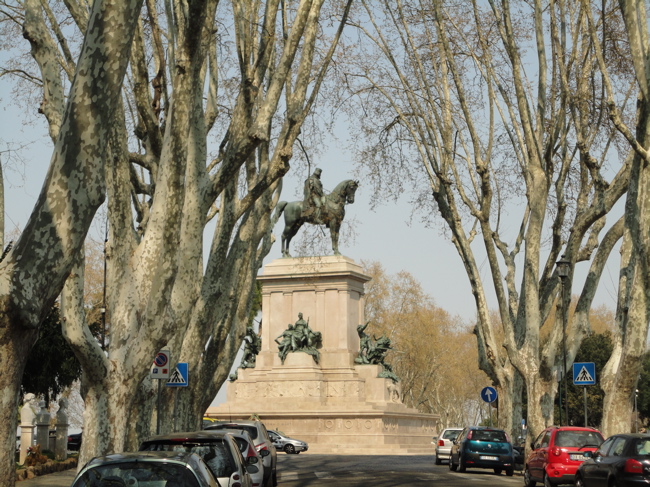
I also subscribe to an internet site called Roma Sparita (Rome disappeared) which has photos of the city between 1860 and 1980. You see how the city has changed or not changed at all, much of what we see in the centre of Rome today has been there for the last 500 years, while what you see outside the Aurelian walls is lest than 100 years old, with some exceptions like the Villa Borghese and other Papal summer palaces. Meaning that if you look at the old photos you realize quickly that Rome was largely rebuilt and expanded at various periods marked by political change. The first one was the return of the Popes from Avignon in France after many decades away from the city. Rome had been largely abandoned and by 1400 it was a small village of a few thousand people living mostly in and around the great basilicas and old Roman Imperial Palaces. Then came the period of the Risorgimento (resurrection) with the creation of the Kingdom of Italy in 1861 and the final defeat of the Papal armies with the liberation of the Italian people by Garibaldi. Then the Fascist period 1923-1943 and the large building programs under Mussolini, finally the period of the 1960's economic boom.
 This painting of Giovanni Paolo Pannini shows the Prati area (the fields) in 1749.This area is across the Tiber from the City. On the far right is the dome of St-Peter's basilica with the Apostolic Palace, in the middle large fields, today this is a bustling neighbourhood called the Borgo and Prati. The round building in the middle is Castel San Angelo, the old mausoleum of Emperor Hadrian. You can barely see the Tiber marking the end of the fields and Rome on the other side.
 Rome 2012, looking from the Gianicolo Hill in Trastevere. Here on the right are the two white marble towers of the Altar to the Italian Nation. In the back the brick belfry of Santa Maria Maggiore. The trees at the front of the photo indicate where the Tiber river is passing.

Edicola Sacra ( sacred kiosk) on Via Nomentana a few steps away from the Russian Consulate. I walked in front of this little shrine every day. There are about 730 such shrines in the City of Rome. This one is dedicated to Divine Love represented by the infant Jesus and his mother Mary. Christian shrines have been in existence since around 1500 and people to this day leave fresh flowers, maybe deposit a few coins in the box and say a little prayer. This one on Via Nomentana a very busy street with 4 lanes of traffic, people coming and going. But the shrines are left undisturbed, no one would dare damage it or steal the flowers. It is like an unwritten rule, shrines in Rome are nothing new even during Imperial antiquity, shrines existed to different deities who protected the neighbourhood, the Christian shrine serves exactly the same purpose. Romans are superstitious so everyone, young and old respects them.
 Fontana delle Tartarughe, (Turtle Fountain) built in 1581 on the order of Pople Gregorio XIII, by Taddeo Landini and Giacomo della Porta. One of the more beautiful fountains of the Renaissance in the City. You can see it in the old Jewish quarter of Rome on Piazza Mattei.
 The Rose garden of Rome note the paths are in the shape of branches of a Jewish Menorah. The garden in facing the Palatine hill and the Circus Maximus. It was created in 1934 when the old Jewish cemetery of Rome was moved from the site. It is a beautiful garden with the most incredible array of roses.
 Before is was moved in 1934 a photo of the old Jewish cemetery of Rome now the Rose garden of the city.

Another view of the Rose garden today in Rome. Well worth a visit.
 The fountain of Piazza Repubblica not very far from our home in Rome on Via dei Villini.
This fountain was built around 1890 and sits at the top of Via Nazionale near the Termini Train Station. When it was inaugurated in the presence of the Pope, the four naked ladies who appear to be having sex with all kinds of sea monsters or swans had not been installed yet to avoid offending the Pope. It is a spectacular fountain.
 Behind St-Peter's basilica the Vatican Mint. Until 1860 the Papal State issued its own currency so it could barter and trade with different countries and pay its employees. This area of the Vatican is not open to the public.
 From Piazza Venezia, the centre of Rome, the traffic at night passing in front of the Vittoriano also known as the Altar to the Nation, the largest white marble monument in the world, symbol of Italian Unity.
 This fall picture of the Imperial Summer Villa of Emperor Hadrian near Tivoli about 30 minutes outside Rome. This pond faces the dining room of the villa. A beautiful site only half of the grounds can be visited, the rest is still under private ownership.
So of course this makes me nostalgic for the Città. Sigmund Freud use to say that Rome was not a city inhabited by humans but more a psychic state of mind. Rome has been described as an idea, a representation of a fantasy. Emperor Augustus gave it the title of Eternal City, though Rome was only about 400 years old at the time, it was the largest city in the known world at 1 million people, a fantastic number given that London and Lutece (Paris) were mud villages of a few thousand inhabitants.
I also subscribe to an internet site called Roma Sparita (Rome disappeared) which has photos of the city between 1860 and 1980. You see how the city has changed or not changed at all, much of what we see in the centre of Rome today has been there for the last 500 years, while what you see outside the Aurelian walls is lest than 100 years old, with some exceptions like the Villa Borghese and other Papal summer palaces. Meaning that if you look at the old photos you realize quickly that Rome was largely rebuilt and expanded at various periods marked by political change. The first one was the return of the Popes from Avignon in France after many decades away from the city. Rome had been largely abandoned and by 1400 it was a small village of a few thousand people living mostly in and around the great basilicas and old Roman Imperial Palaces. Then came the period of the Risorgimento (resurrection) with the creation of the Kingdom of Italy in 1861 and the final defeat of the Papal armies with the liberation of the Italian people by Garibaldi. Then the Fascist period 1923-1943 and the large building programs under Mussolini, finally the period of the 1960's economic boom.


Edicola Sacra ( sacred kiosk) on Via Nomentana a few steps away from the Russian Consulate. I walked in front of this little shrine every day. There are about 730 such shrines in the City of Rome. This one is dedicated to Divine Love represented by the infant Jesus and his mother Mary. Christian shrines have been in existence since around 1500 and people to this day leave fresh flowers, maybe deposit a few coins in the box and say a little prayer. This one on Via Nomentana a very busy street with 4 lanes of traffic, people coming and going. But the shrines are left undisturbed, no one would dare damage it or steal the flowers. It is like an unwritten rule, shrines in Rome are nothing new even during Imperial antiquity, shrines existed to different deities who protected the neighbourhood, the Christian shrine serves exactly the same purpose. Romans are superstitious so everyone, young and old respects them.


Another view of the Rose garden today in Rome. Well worth a visit.

This fountain was built around 1890 and sits at the top of Via Nazionale near the Termini Train Station. When it was inaugurated in the presence of the Pope, the four naked ladies who appear to be having sex with all kinds of sea monsters or swans had not been installed yet to avoid offending the Pope. It is a spectacular fountain.